

As a critical isolation device in power systems, the reliability of disconnecting switches directly impacts grid safety. This article uses the GW4-126 disconnecting switch as an example, combining IEC 62271-102 standards and practical engineering experience to elaborate on key operational and maintenance requirements.
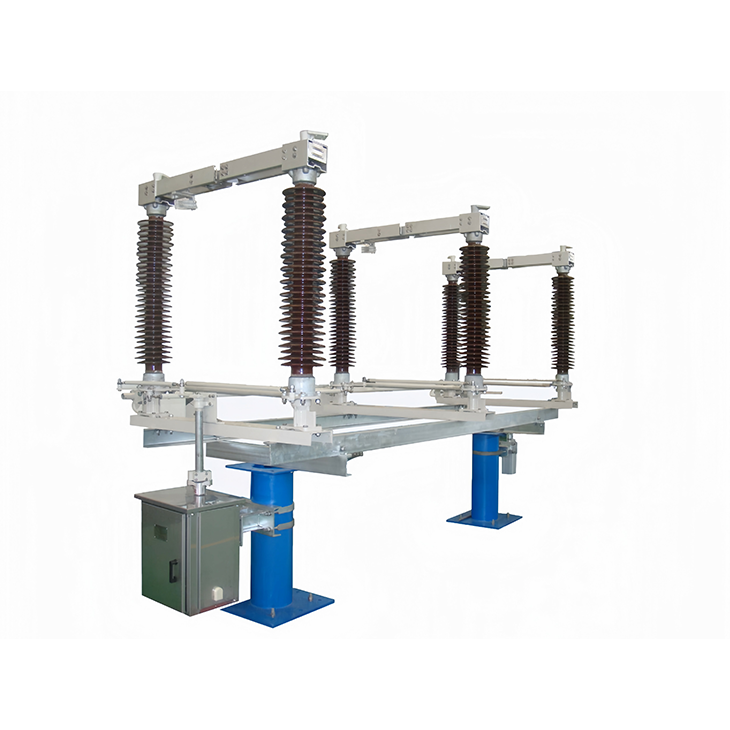
I. Core Maintenance Technical Specifications
Contact System Maintenance
Contact Resistance Measurement:
Use a micro-ohmmeter (accuracy ±1%) under 10% of the rated current. Standard value: ≤200μΩ (126kV class). If resistance exceeds limits:
Oxidation Layer Treatment: For thickness >0.2mm, polish along the contact movement direction using 120-grit sandpaper (avoid steel brushes to prevent base material damage).
Conductive Grease Application: Apply MOLYKOTE® G-5011 (silver-containing), thickness 0.05–0.1mm, coverage ≥90%.
Wear Monitoring: Use a laser thickness gauge every 6 months. Allowable wear: ≤3mm (as specified in DL/T 596).
Insulation Performance Management
Porcelain Insulator Cleaning:
For areas with pollution class III or higher, perform quarterly water washing (pressure 0.4–0.6MPa, water temperature >5°C) to control salt density ≤0.1mg/cm².
Crack Detection: Use an ultrasonic flaw detector. Replace if crack depth >0.5mm or length >30mm (GB 8287.1).
Composite Insulator Inspection: Hydrophobicity test must reach HC1 level (spray method). Replace if silicone rubber sheds are damaged (>5cm²).
Mechanical Operation Optimization
Operating Torque Control:
Calibrate using a digital torque wrench. Opening/closing torque ≤250N·m (GW4 series).
Lubrication Management:
Rotating Shaft: Lubricate biannually (spring/autumn) with molybdenum disulfide lithium-based grease (NLGI Grade 2). Fill 60% of bearing chamber.
Gearbox Oil Replacement: Replace CLP 220 gear oil every 5 years. Replace earlier if kinematic viscosity change >15%.
II. Installation Process Standards
Foundation Positioning Requirements
Leveling Control: Calibrate with a laser level (longitudinal/lateral error <2°). For multi-section series, use a theodolite to ensure coaxial deviation <1°.
Anchor Bolt Treatment: M24 bolt preload force 300N·m±5%. Apply ZINGA® anti-corrosion coating (thickness ≥80μm) post-installation.
Grounding System Construction
Conductor Selection: Use TMY-50×6 copper busbars (cross-section ≥50mm²) with tinned搭接 surfaces.
Ground Resistance Testing: Measure via four-pole method. For soil resistivity >100Ω·m, apply resistivity-reducing agents (e.g., bentonite) to ensure resistance <4Ω.
Special Environmental Adaptations
Coastal Areas:
Use 316L stainless steel components (salt spray test ≥2000 hours).
RTV-II anti-pollution flashover coating (0.3–0.5mm thickness).
Cold Regions:
Use low-temperature grease (pour point -40°C).
Install electric heaters (200W) on operating mechanisms.
III. Preventive Maintenance System Recommendations
Intelligent Monitoring Systems:
Install wireless temperature sensors (±1°C accuracy) for real-time contact temperature monitoring.
Use vibration sensors to detect mechanical looseness (alarm at >200Hz).
Documentation Management:
Maintain equipment history cards recording torque values, lubrication dates, etc.
Implement QR code labeling for spare parts lifecycle tracking.
Cost-Benefit: Standardized maintenance extends service life from 20 to 30 years, reducing lifecycle costs by 40%.