

Hebei Yueyang Electric Power Technology Co., Ltd. belongs to Beijing Beikai Zhongdian Group (established in 2005). It is a manufacturer of high and low voltage electrical equipment that integrates R&D, production, and sales. The company's main products include isolation switches, switchgear, vacuum circuit breakers, transformers, Drop Out Fuse, lightning arresters, and other series of products, which are widely used in ports, rail transportation, new energy, power systems, and infrastructure construction. These products are exported to over 60 countries and regions worldwide.

Our Advantages
Strong Production Capacity
Our company covers an area of about 20,000 square meters, has 30 factories and two branches, and has more than 100 employees. More than 20 years of production experience enable us to meet the diverse production needs of users.
Focus on Product Innovation
We continue to adhere to product innovation and technological innovation, established a technology research and development center, and obtained more than 60 utility model patents.
Advanced Production Equipment
Our company is equipped with 20 lathes, 10 universal cleaning machines, 8 drilling and washing machines, 5 punching machines, 9 experimental benches, 5 detectors, etc., to provide a guarantee for the high-precision production of products.
Recognized Product Quality
Our company has passed ISO9001 series system certification and has also established a product testing center. Reliable products have been sold to many countries and regions such as Europe, Africa, Southeast Asia, and the Middle East, and have been well received.


The high voltage power transformer is used to reduce the high voltage value in order to reduce the safety value. It can be used to isolate equipment and high-power circuits to ensure safety. High power transformers play an essential part in the distribution and transmission of electricity.

Isolation and Productivity
Transformers are incredibly useful devices that have a wide range of applications. They are especially useful in providing electrical isolation between two circuits. There is no electrical connection between the transformer's primary and secondary windings. Transformers work by transferring energy entirely through magnetic coupling, which makes them highly efficient and reliable. The basic structure of conventional transformers has remained the same over the past decades. Still, advances in material technology have resulted in higher saturation densities and lower hysteresis losses in transformers, resulting in an efficiency of about 97 percent for even very efficient transformers.
Simple Working Principle and Construction
A transformer is a static device consisting of a winding, or two or more coupled windings, with different numbers of turns on a magnetic core, for inducing mutual coupling between circuits. The alternating magnetic field created in one winding induces a current in the other, which is proportional to the number of turns. Transformers are exclusively used in electrical power systems to transfer power by electromagnetic induction between circuits at the same frequency with very little power loss, voltage drop, or waveform distortion.
Various Types and Wide Usage Areas
Transformers have various types: distribution, power, current, potential, and isolation transformers. Each of them works on the same principle but has different usage areas. For example, current transformers step down currents for measurement instruments.
No Moving Parts
A transformer has no internal moving parts and transfers energy from one circuit to another by electromagnetic induction. It ensures, under normal conditions, a long and trouble-free life. Besides, it does not require any starting time.
Application of High Voltage Power Transformer

Electric Power Transmission and Distribution
Power Generation Plants
Industrial Facilities
Transformer Substations
Railway Electrification
Renewable Energy Systems
Components of High Voltage Power Transformer
Core Components
The core supports the windings and provides a low reluctance path for the magnetic flux. It is made by stacking and laminating thin steel sheets. The sheets are insulated from each other by a coating. To reduce eddy current losses and hysteresis losses, the iron or steel sheets are less than one millimeter thick, and their carbon content is maintained below 0.1%. Eddy current is further reduced by alloying the steel with silicon. The vertical sections of the core in which the windings are carried are referred to as the limbs, while the horizontal sections of the core that couples the limbs are referred to as the yokes.
Windings in Power Transformers
The windings are made up of copper or aluminum conductor coil with a specific number of turns. Copper is the preferred material since it offers high electrical conductivity and high ductility; these properties reduce the amount of winding and make the material easier to wrap around the core. A transformer consists of at least two windings- the primary and the secondary windings. The primary winding is the winding in which the input voltage is applied, while the secondary winding is the winding that receives the output voltage. The primary and the secondary windings in a phase of a transformer can play as the high voltage (HV) winding or the low voltage (LV) winding.
Insulating Materials
Insulating materials are used to isolate the windings from the core, the primary and the secondary windings, and each turn of the windings. These materials protect the transformer from damage. Transformer insulators should have high dielectric strength, good mechanical properties, and can withstand high temperatures.
Tap Changer
Tap changers are devices that regulate the transformer’s output voltage as it responds accordingly to the varying input voltage and load by adjusting the number of turns in one winding. This adjustment, therefore, changes the turn ratio. During offloading conditions, the output voltage increases, whereas during loaded conditions, the output voltage decreases. Tap changers are typically connected in the HV winding to make fine voltage regulations and minimize core losses of the transformer. The current is also lower in the HV winding, which minimizes the risk of sparking and igniting the transformer oil.
Bushings in Transformers
Bushings are insulated barriers that contain the terminal that connects the current-carrying conductor from an electrical network to the ends of the transformer windings. The bushing insulation is typically made from porcelain or epoxy resin. The bushings are mounted over the main tank.
Transformer Tank
The transformer tank (or the main tank) houses and protects the core, windings, and other components from the external environment. It serves as the container for the transformer oil. It is constructed from rolled steel plates or aluminum sheets.
Conservator Component
The conservator is a tank that serves as the reservoir of the transformer oil and is located above the main tank and bushings. Transformer oil from the conservator is supplied to the main oil tank inside the transformer through a pipeline. The conservator has a flexible bladder that allows the expansion and contraction of the oil. It has an adequate space to allow the expansion of the oil during high ambient temperatures. The conservator is vented to the atmosphere to balance the pressure changes during the expansion and contraction of the oil by intaking or releasing air.
Breather Component
The breather delivers moisture-free air to the conservator by passing air through a small bed of silica gel inside a cylindrical container. The silica gel acts as an air filter that strips and controls the moisture level inside the conservator and the main tank. The breather is connected by a pipeline to the conservator. Moisture can degrade the insulating properties of the transformer oil or may even lead to internal faults. Therefore, it is necessary to remove the moisture.
Cooling System
The cooling system is a critical component of transformers regardless of the insulating material utilized. Power losses occurring in the transformers are in the form of heat increasing the temperature of the windings and the core. Consequently, the temperature of the insulating material will also increase. Without a cooling system, these components may be damaged or decomposed if heated continually. The cooling system of transformers consists of fans, radiators, and cooling tubes. Heat transfer mechanism occurs by natural and/or forced convection and radiation.
Explosion Vent
The explosion vent is a metallic pipe with a diaphragm at its free end located slightly above the conservator tank. It releases gases, transformer oil, and energy during internal faults to relieve the excessive pressure inside the transformer, thus preventing the explosion of the transformer. Faults elevate the internal pressure of the transformer to dangerous levels. When such circumstances occur, energy will be released into the atmosphere, destroying the diaphragm at relatively low pressure.
Buchholz Relay
The Buchholz relay is a device installed along the pipeline connecting the conservator and the main tank. It detects faults in the transformer by sensing the emitted gases to activate the trip and alarm circuits. Once the trip circuit is activated, the circuit breaker will then disrupt the current flow to the primary winding. Emitted gases are generated by the heat released induced by faults.
The operation of the high voltage transformer is based on the principle of electromagnetic induction. The primary winding and secondary winding are wound around the iron core constituting the closed loop. When the primary winding is applied with AC voltage, alternating magnetic flux is generated in the iron core. The alternating magnetic flux induces an electromotive force in the primary and secondary windings because the turns of the primary and secondary windings are different Therefore, the magnitude of the induced electromotive force at the primary and secondary sides is different, thus realizing the purpose of voltage transformation. The more coil turns, the higher the output voltage. Therefore, the volume of the high voltage transformer is larger.

Step 1: Pre-Inspection Planning
A thorough pre-inspection planning is essential to ensure an efficient and successful inspection. Follow these steps:
● Review the manufacturer's documentation and guidelines for inspection.
● Identify the type and rating of the transformer.
● Obtain relevant industry statistics and standards.
● Plan the schedule for inspection, considering any downtime constraints.
Step 2: Visual Inspection
The first step in inspecting a high voltage transformer is a visual examination. It helps identify any visible signs of damage, leaks, or abnormal conditions. Here are some key points to consider:
● Check for any physical damage, such as dents, corrosion, or loose connections.
● Inspect the insulation components for signs of aging, cracking, or degradation.
● Look for oil leaks around the transformer and ensure proper sealing.
● Examine the cooling system and fans for any blockages or malfunctions.
Step 3: Mechanical Inspection
The mechanical inspection focuses on the overall mechanical integrity and stability of the transformer. Follow these steps:
● Check the transformer's foundation and supports for stability.
● Inspect the bushings, tap changers, and other accessories for proper functioning.
● Ensure the winding clamping system is securely in place.
● Inspect the gaskets, flanges, and seals for any signs of wear or leakage.
Step 4: Electrical Testing
Electrical testing is crucial to assess the transformer's electrical performance and identify any potential issues. Here are some important electrical tests to conduct:
● Perform a turns ratio test to check the health of windings.
● Conduct insulation resistance tests to measure the insulation condition.
● Check the power factor to assess the dielectric losses.
● Perform a sweep frequency response analysis (SFRA) for detecting any mechanical damage.
Step 5: Oil Analysis
An oil analysis is essential to assess the condition of the transformer's insulating oil. It provides crucial information about the transformer's health. Follow these steps:
● Collect a representative oil sample from the transformer.
● Perform a dissolved gas analysis (DGA) to detect any electrical or thermal faults.
● Measure the moisture content in the oil, as excessive moisture can degrade insulation.
● Check for any signs of contaminants or impurities in the oil.
Step 6: Post-Inspection Analysis
After completing the inspection, it's time to analyze and interpret the gathered data. Here are some key points:
● Compare the inspection results with industry standards and previous records.
● Identify any potential issues or areas of concern.
● Prepare a detailed report highlighting the findings and recommendations.
● Schedule necessary repairs, maintenance, or replacements based on the analysis.
Factors to Consider Before Choosing a High Voltage Power Transformer
The first step is to determine the load requirements of your power system, such as the voltage, current, frequency, power factor, and harmonics. You also need to consider the future load growth, the load diversity, and the load profile. These factors will affect the transformer rating, the winding configuration, the insulation level, and the cooling method. You can use load flow analysis, short circuit analysis, and load factor analysis to estimate the load requirements. It is strongly recommended to consider the applicable Standards in the country and area the transformer will be installed in prior to anything else.
The next step is to select the type of power transformer that suits your application. There are different types of power transformers, such as oil-filled, dry-type, cast-resin, and gas-insulated. Each type has its own advantages and disadvantages, depending on the cost, performance, maintenance, environmental impact, and safety. You need to compare the technical specifications, the life cycle costs, and the availability of each type of transformer.
The third step is to calculate the size of the power transformer, based on the load requirements and the transformer type. The size of the transformer is determined by the kVA rating, which is the product of the voltage and the current. You need to apply some safety factors and correction factors to account for the losses, the temperature rise, the harmonics, and the overload conditions. You can use empirical formulas, nomograms, or software tools to calculate the transformer size.
The fourth step is to check the transformer efficiency, which is the ratio of the output power to the input power. The transformer efficiency depends on the losses, which are mainly divided into core losses and winding losses. Core losses are caused by the hysteresis and eddy currents in the magnetic material, while winding losses are caused by the resistance and skin effect in the conductors. You can reduce the losses by choosing high-quality materials, optimizing the design, and using tap changers.
The fifth step is to evaluate the transformer performance, which is measured by several parameters, such as the voltage regulation, the impedance, the short circuit withstand, and the thermal rating. Voltage regulation is the change in the output voltage due to the load variation, impedance is the opposition to the current flow, short circuit withstand is the ability to handle fault currents, and thermal rating is the maximum temperature that the transformer can operate at. You can use standards, tests, and simulations to evaluate the transformer performance.
The final step is to compare the transformer options, based on the criteria that are relevant to your application. Some of the criteria are technical, such as the size, efficiency, performance, and reliability. Some of the criteria are economic, such as the initial cost, the operating cost, and the payback period. Some of the criteria are environmental, such as the noise, the emissions, and the disposal. You can use a weighted scoring method, a cost-benefit analysis, or a life cycle assessment to compare the transformer options.
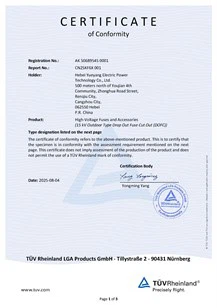
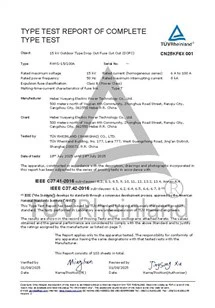
Our Certificate
Multiple certifications and product patents mean excellent product quality.

Ultimate FAQ Guide to High Voltage Power Transformer
Q: What is considered high voltage transformer?
Q: How does a high voltage transformer work?
Q: What uses a high voltage transformer?
Q: Which type of transformer is used in high power lines?
At the beginning of the High tension transmission line, there is a very high voltage at the secondary side. This is achieved by using a step-up transformer. At the beginning of the High tension transmission line, the primary side is low voltage side & the secondary is the high voltage side.
Q: Where are LV and HV in the transformer?
Q: Which type of transformer is most commonly used?
This is the most common type of transformer, widely used in electric power transmission and appliances to convert mains voltage to low voltage to power electronic devices.
Q: Why transformer is not used on DC?
Q: How do you calculate a high voltage transformer?
Q: Do transformers change AC to DC?
Q: Why do we test high voltage in transformer?
Q: What are the risks of high voltage transformers?
Q: Why auto transformer is used for high voltage?
Q: Which transformer is better?
Q: Which is the most efficient transformer?
Q: Which transformer is used in a factory?
Q: What are the applications of High Voltage Transformers?
● Transmitting and distributing electric power over long distances with reduced losses and improved efficiency
● Converting AC power to DC power or vice versa for HVDC systems that can interconnect different grids, integrate renewable energy sources, or transmit power underwater or underground
● Controlling reactive power and voltage stability for FACTS systems that can improve the performance and reliability of AC power systems
● Generating high frequency or impulse voltages for special purposes such as induction heating, radio transmission, or lightning simulation
Q: What is a high voltage power transformer?
Q: What are the factors affecting high voltage transformer cost?
● Standard wire: copper wire or aluminum wire can be used. Compared with aluminum wire, copper wire has long conductivity, safety, and service life. Therefore, copper wire will be more expensive than aluminum wire. Generally, there are two kinds of transformers: copper wire transformers and aluminum wire transformers. The price of a copper wire transformer is more expensive.
● Production: winding insulated wire is very meticulous work, which requires great care to avoid damage. The coil must be manufactured manually to ensure the quality of the transformer.
● Insulating tape: insulating tape is used for the winding of the transformer, which is for fixation and insulation.
● Large diameter: the larger the wire diameter, the higher the cost.
Q: What is the voltage rating of a high voltage power transformer?
Q: What are the factors that affect the insulation of a high voltage power transformer?
As one of the leading high voltage power transformer manufacturers and suppliers in China, we warmly welcome you to buy cheap high voltage power transformer for sale here from our factory. All customized products are with high quality and low price.