

Hebei Yueyang Electric Power Technology Co., Ltd. belongs to Beijing Beikai Zhongdian Group (established in 2005). It is a manufacturer of high and low voltage electrical equipment that integrates R&D, production, and sales. The company's main products include isolation switches, switchgear, vacuum circuit breakers, transformers, Drop Out Fuse, lightning arresters, and other series of products, which are widely used in ports, rail transportation, new energy, power systems, and infrastructure construction. These products are exported to over 60 countries and regions worldwide.

Our Advantages
Strong Production Capacity
Our company covers an area of about 20,000 square meters, has 30 factories and two branches, and has more than 100 employees. More than 20 years of production experience enable us to meet the diverse production needs of users.
Focus on Product Innovation
We continue to adhere to product innovation and technological innovation, established a technology research and development center, and obtained more than 60 utility model patents.
Advanced Production Equipment
Our company is equipped with 20 lathes, 10 universal cleaning machines, 8 drilling and washing machines, 5 punching machines, 9 experimental benches, 5 detectors, etc., to provide a guarantee for the high-precision production of products.
Recognized Product Quality
Our company has passed ISO9001 series system certification and has also established a product testing center. Reliable products have been sold to many countries and regions such as Europe, Africa, Southeast Asia, and the Middle East, and have been well received.


A vacuum circuit breaker is a breaker that uses a vacuum as an arc extinction medium. The fixed and movable contacts in this circuit breaker are contained in a permanently sealed vacuum interrupter. Because the contacts are separated in a high vacuum, the arc is extinct.

Advantages of Vacuum Circuit Breaker
High Insulation and Dielectric Strength
Vacuum circuit breakers provide excellent insulation and dielectric strength. The absence of air or other gases in the vacuum interrupter ensures a high dielectric withstand capability, reducing the risk of flashovers.
High Interruption Capacity
Vacuum circuit breakers are capable of interrupting high fault currents. They have a high current-carrying capacity, making them suitable for applications where large fault currents may occur.
Low Maintenance Requirements
Vacuum circuit breakers have minimal maintenance requirements compared to other types of circuit breakers. They do not require regular lubrication or frequent checks, resulting in lower maintenance costs.
Quick Arc Extinction
Vacuum interrupters have a rapid arc extinction capability. The absence of ionizable gases in the vacuum chamber contributes to the quick and efficient extinguishing of the arc during circuit interruption.
Reduced Environmental Impact
Vacuum circuit breakers are considered more environmentally friendly compared to some other types of circuit breakers. They do not use environmentally harmful insulating gases like sulfur hexafluoride (SF6), which is a greenhouse gas.
Fast Switching Speed
Vacuum circuit breakers have fast switching times, which is crucial for applications where rapid disconnection or reconnection of electrical circuits is required.
Application of Vacuum Circuit Breaker

Power Distribution Systems
Power Generation Plants
Industrial Plants
Mining Industry
Railway Systems
Transformer Protection
Construction of Vacuum Circuit Breaker
External Layer
Some external layer of the vacuum circuit breaker is made up of glass. This setup ensures clear visibility of the entire VCB unit from outside. So, if the glass turns hazy and milky, it is a clear indication that the breaker is releasing a vacuum. Thus, the external shiny glass is important to monitor the function of the breaker after the operation. Some external layer is made of metal, which could resist external corrosion and dust.
Arc Shield
The arc shields are covered by insulating housing. These cover the shields and prevent any condensing on the enclosure. The arc shields block the metallic vapors from falling inside the surface of the outer insulating cover. The arc shield holds the fixed and moving contacts. Alloys like Copper- Chrome, and Copper-Bismuth are considered ideal materials to create VCB contacts. The materials of the contact play a major role in the performance of the high current circuit breaker. The steel arc chamber is symmetrically mounted inside the ceramic insulators.
Fixed and Moving Contacts
The moving contact is connected with the help of stainless steel bellows. it is connected to the control mechanism. While sealing off these contacts in the arc shield, the temperature is usually maintained at around 10 -6 torr. The operating voltage determines the motion of the moving contacts. Usually, the moving contacts are moved at a distance of about 5 to 10 mm.
Vacuum Interrupters
Vacuum Interrupters are sealed-off devices within the vacuum that are consolidated inside VCB. They cause an interruption in any fault currents. They include an arc chamber of steel placed inside symmetrical ceramic insulators. The vacuum pressure inside the vacuum interrupter can be maintained at 10-6 bar. It is assembled in a clean environment. The performance of the vacuum circuit breaker depends on the material of contacts carrying currents like Copper and Chromium.
Working Principle of Vacuum Circuit Breaker
The working principle of a vacuum circuit breaker (VCB) is to isolate the contact when faults occur in the system and to extinguish the arc generated within the vacuum, during the operation. When a fault occurs in the system, the circuit breaker opens its contact in order to isolate the system as fast as possible. Now, during this operation, the arc is generated because of the metal vapors ionization in the contacts. Also, in other words, the temperature is too high in the connecting parts due to which there occurs an ionization. This arc generated can be quickly stopped or extinguished as electrons, ions & metallic vapors are condensed in the contact surface which makes a quick improvement rate in the dielectric strength of the vacuum. The working of the Vacuum Circuit Breaker depends on the stored-energy mechanism in the closing spring. Closing spring can be done electrically or manually and it is charged automatically after the operation. Finally, the tripping is done after detecting high voltage in the system thereby breaking the contact to isolate the system.
Interrupting Capacity
It is the maximum current in which the breaker is designed to interrupt safely at a certain voltage.
Short Time Settings
It is the characteristic of a circuit breaker to remain closed for a time interval under a range of high fault currents. It is an important factor in achieving selective coordination among circuit breakers.
Long Time Settings
It is the setting of the circuit breaker to determine the time duration to allow a certain overload current to flow before tripping.
Continuous Amps
It is the current which the device will carry without tripping or overheating.
Frame Size
Frame size indicates the physical size of the breaker as well as the maximum continuous current it can tolerate.
Rated KV
It indicates the highest system voltage which the circuit breaker can sustain.

Testing
● Visual Inspection
The visual check is the simplest and primary one. Various parts such as drive insulators and molded pole unit support can be checked visually for dirt and cracking. Similarly, the control circuit parts such as wiring and terminals can also be checked for their intactness. For testing dirt and dust in the operating mechanism, a visual check is there. Sometimes, along with visual inspection, one can also feel and sense to inspect the parts e.g., for checking the tightness of hardware or operating mechanism.
● Vacuum Interrupter Integrity Test
The reliability of a vacuum circuit breaker depends upon the integrity of the vacuum and the internal dielectric strength. For checking both of them, vacuum interrupter testing is arranged. The vacuum circuit breaker testing procedure is also known as a hipot test because a high potential is applied during the testing. This one-minute ac high potential test is used to check the insulation integrity from the main circuit to ground, from the control circuit to ground, and between main circuit terminals. A successful withstand indicates the good functioning of the vacuum interrupters whereas a break-down indicates that there is a defective interrupter or interrupters that needed to be repaired or replaced.
● Mechanism Check
The mechanism check involves visual inspection of the mechanism for any loose parts such as rings, bolts, and others. The other parts of mechanism check can include measurement check, functional check, operational check, or a combination of these. The measurement check is required for the inspection of vacuum interrupters for the visibility of three contact erosion indicators and contact wipe measurement. For checking the smooth functioning of a motor, a functional test is required. Similarly, for excessive wearing or deformation of the operating mechanism, both visual and operational checks are required. Sometimes, for the checking of the correct and smooth operation of certain parts, closing, tripping of the circuit breaker, or manual charging is also employed.
Insulation
This is one of the simplest maintenance techniques. Insulation maintenance applies to the cleaning of all the insulation surfaces. Any soft cloth like a dry lint-free cloth or dry paper towel can be used to wipe off the dust from the insulation surfaces to ensure their smooth functioning. If wiping is unable to remove dust properly, distilled water or a mild solvent can be used for the purpose of removing dirt and dust. Once wiped, make sure that all the surfaces have completely dried up before placing the circuit breaker in service. Inspect for any damage to the insulation and ensure that all the wires are tightly connected before putting the circuit breaker back in use.
Lubrication
Proper lubrication is required periodically to ensure the overall smooth and correct functioning of all the parts of a vacuum circuit breaker and VCB maintenance. The gap between relubrication depends on the frequency of the circuit breaker used. Generally, it is suggested to go for relubrication once a year. For lubrication, a drop of light machine oil can be used. After lubrication, the circuit breaker needs to be operated several times manually and electrically so that the oil is absorbed into the parts properly. Roller bearings come packed with a high-quality slow oxidizing grease from the vcb manufacturer itself. Hence, they should be lubricated only when needed.
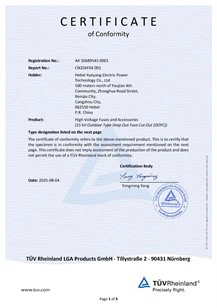
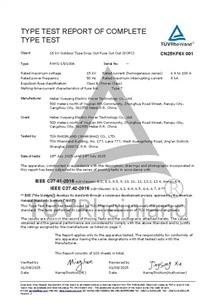
Our Certificate
Multiple certifications and product patents mean excellent product quality.

Ultimate FAQ Guide to Vacuum Circuit Breakers
Q: What are the advantages of Vacuum Circuit Breaker?
● Rapid recovery of high dielectric strength on current interruptions that only a half cycle or less arcing occurs after proper contact separation.
● Breaker unit is compact and self-contained. It can be installed in any required orientation.
Q: What is the purpose of VCB?
Q: What is the difference between vacuum and air circuit breakers?
Q: What is the vacuum pressure in a vacuum circuit breaker?
Q: Why is VCB used in the HT line?
Q: Which relay is used in VCB?
Q: How many types of VCB are there?
Q: How does a vacuum interruptor work?
Q: What happens when the contacts open?
Q: Which is better RMU or VCB?
VCB: VCBs have higher breaking capacities and can interrupt larger fault currents, making them suitable for high voltage transmission systems.
Q: How many coils does a VCB have?
Q: What is protection in VCB?
Q: Which is the most serious problem in vacuum circuit breaker?
Q: How to do VCB maintenance?
Q: How does a vacuum circuit breaker work?
Q: Which motor is used in vacuum circuit breaker?
Q: How much vacuum does a VCB breaker have?
Q: How do you test a vacuum circuit breaker?
Q: What is VCB protection?
Q: Vacuum Circuit Breaker vs. SF6 Breaker: What is the difference?
Different Insulation Mediums
Vacuum switchgear employs a vacuum for insulation, while SF6 circuit breakers rely on sulfur hexafluoride gas.
Different Operating Pressures
Vacuum breakers operate at lower pressures compared to SF6 circuit breakers, enabling them to handle higher voltages and employ simpler operating mechanisms.
Different Environmental Impacts
Vacuum breakers have no adverse environmental impact as they do not use harmful materials. In contrast, SF6 circuit breakers use sulfur hexafluoride gas, a greenhouse gas.
Q: How do you choose the right circuit breaker?
Q: What is the rated current of vacuum circuit breaker?
As one of the leading vacuum circuit breaker manufacturers and suppliers in China, we warmly welcome you to buy cheap vacuum circuit breaker for sale here from our factory. All customized products are with high quality and low price.