

Hey there! As a supplier of High Voltage Disconnect Switches, I often get asked about the breaking capacity of these crucial electrical components. So, let's dig into what the breaking capacity of a High Voltage Disconnect Switch really means.
First off, what's a High Voltage Disconnect Switch? It's a device used in electrical systems to isolate a part of the circuit for maintenance, repair, or safety reasons. These switches are designed to operate at high voltages, typically in power transmission and distribution networks.
Now, let's talk about breaking capacity. The breaking capacity of a High Voltage Disconnect Switch refers to its ability to safely interrupt an electrical circuit under specific conditions. It's a measure of how much current the switch can handle when it's being opened to break the circuit.
There are two main types of breaking capacities we usually consider: symmetrical breaking capacity and asymmetrical breaking capacity.
Symmetrical breaking capacity is the ability of the switch to interrupt a fault current that is symmetrical. In a symmetrical fault, the current waveform is balanced, and the switch needs to be able to handle this balanced current flow when it breaks the circuit. This is important because in many electrical systems, faults can occur that result in a symmetrical current flow.
Asymmetrical breaking capacity, on the other hand, takes into account the fact that in real - world situations, fault currents are often asymmetrical. An asymmetrical fault can have a DC component in addition to the AC component. This DC component can make it more difficult for the switch to interrupt the circuit. So, the asymmetrical breaking capacity is usually higher than the symmetrical breaking capacity to ensure that the switch can handle these more complex fault conditions.
Why is breaking capacity so important? Well, if a switch doesn't have a high enough breaking capacity, it can't safely interrupt the circuit when a fault occurs. This can lead to all sorts of problems, like arcing, overheating, and even damage to the switch itself. In the worst - case scenario, it can pose a serious safety risk to the people working on the electrical system and cause significant disruptions to the power supply.
Let's take a look at some of the factors that can affect the breaking capacity of a High Voltage Disconnect Switch.
The design of the switch plays a big role. A well - designed switch with high - quality materials and a proper arc - quenching mechanism will generally have a higher breaking capacity. For example, switches with advanced arc - quenching technologies can quickly extinguish the arc that forms when the switch is opened, allowing it to safely interrupt the circuit.
The voltage level at which the switch operates also matters. Higher voltage switches usually need to have a higher breaking capacity because the fault currents at high voltages can be much larger.
The type of load the switch is connected to can impact the breaking capacity. Different types of loads, such as inductive loads or capacitive loads, can cause different fault current characteristics. For instance, inductive loads can produce a large inrush current during a fault, which the switch needs to be able to handle.
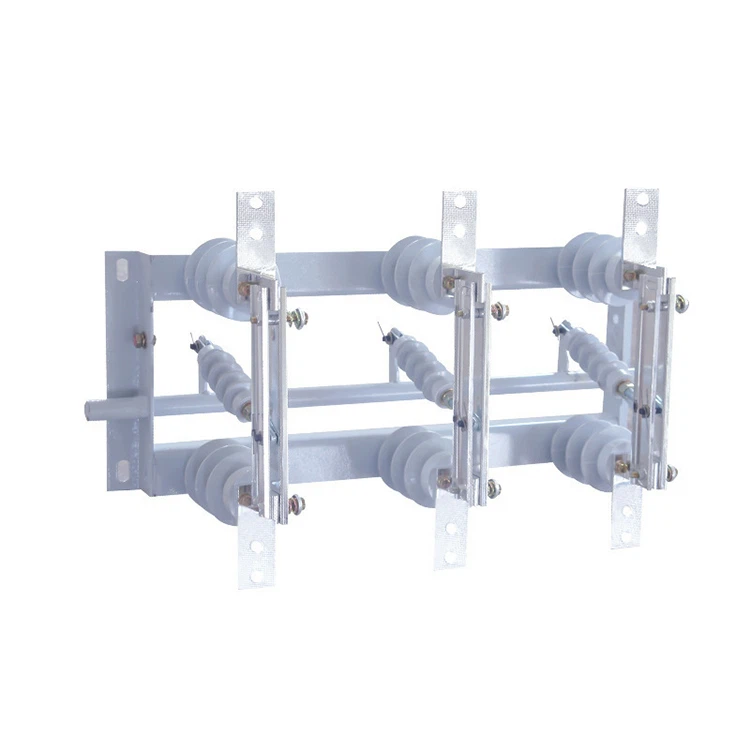

At our company, we offer a range of High Voltage Disconnect Switches with different breaking capacities to meet the needs of various electrical systems. For indoor applications, we have the Indoor High Voltage Isolation Switch. This switch is designed to provide reliable isolation in indoor electrical substations and has a high breaking capacity to ensure safe operation.
If you're looking for an outdoor option, the GW4 - 252 Outdoor AC High Voltage Isolating Switch is a great choice. It's built to withstand harsh outdoor environments and can handle high - fault currents with its excellent breaking capacity.
We also have the Silicone High Voltage Isolating Switch. The silicone insulation in this switch provides good electrical and mechanical properties, and it has a breaking capacity that makes it suitable for a wide range of applications.
When it comes to choosing the right High Voltage Disconnect Switch, it's crucial to accurately assess the breaking capacity requirements of your electrical system. This involves analyzing the possible fault currents, the voltage levels, and the type of load. If you're not sure how to do this, our team of experts is here to help. We can provide you with technical advice and guidance to ensure that you select the switch with the appropriate breaking capacity for your specific needs.
In conclusion, the breaking capacity of a High Voltage Disconnect Switch is a critical factor in its performance and safety. It determines the switch's ability to interrupt electrical circuits under fault conditions, and choosing a switch with the right breaking capacity is essential for the reliable operation of your electrical system.
If you're in the market for a High Voltage Disconnect Switch, we'd love to have a chat with you. Whether you need to discuss the breaking capacity requirements of your project or want to learn more about our product range, don't hesitate to get in touch. We're here to provide you with the best solutions for your electrical needs.
References
- Electrical Power Systems Engineering textbooks
- Industry standards and guidelines for High Voltage Disconnect Switches